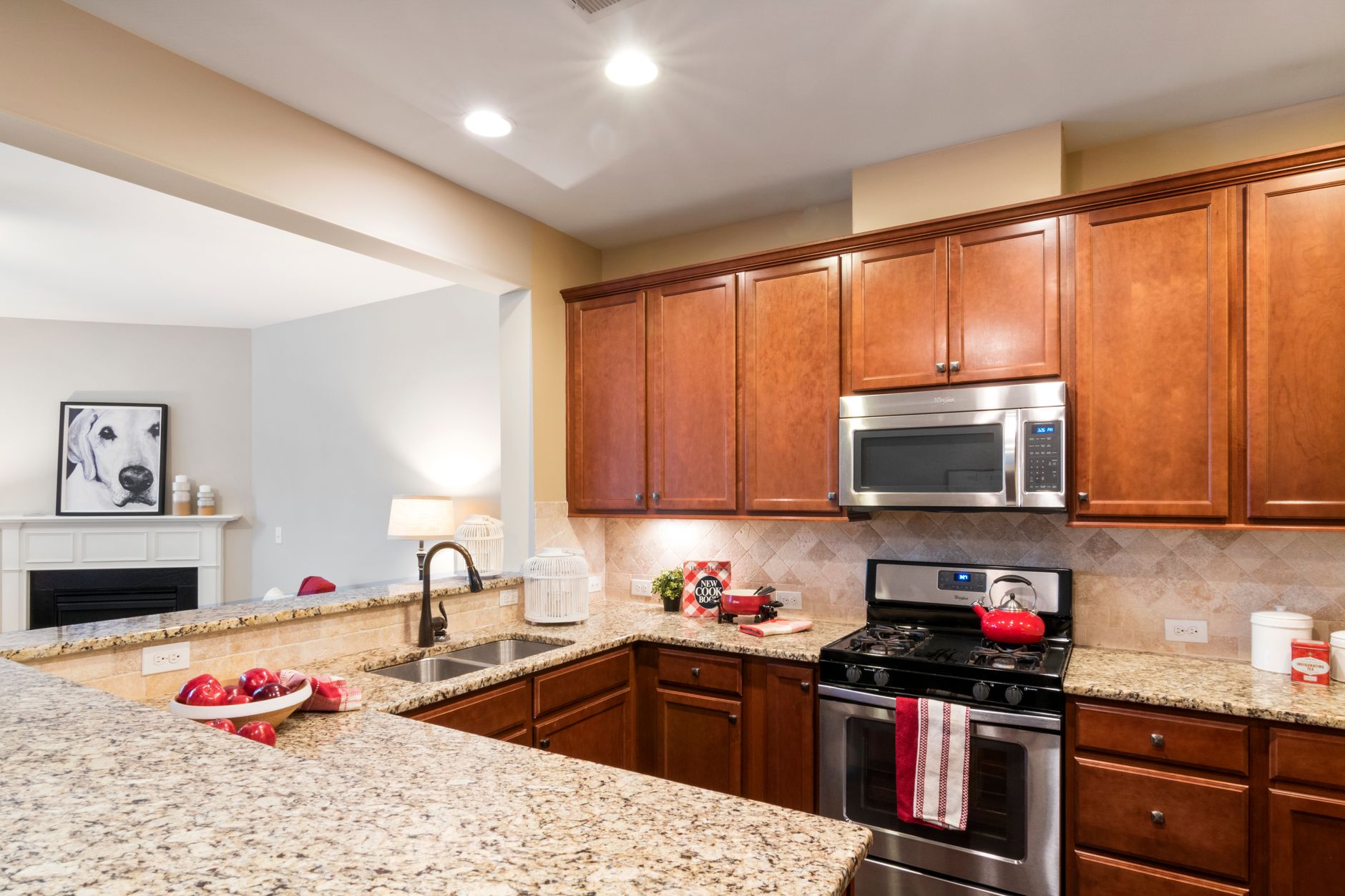
Granite Countertops in Temecula, CA
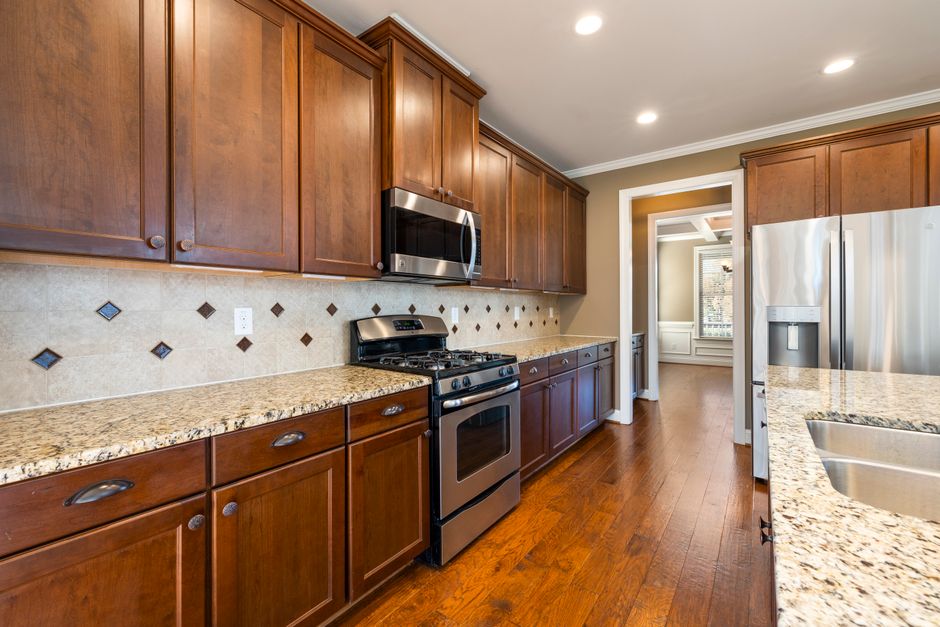
Notes from the slab yard and the kitchen on granite countertops in Temecula, CA: picking slabs, finishes, sealing and everyday care.
What We Cover
- Choosing a Granite Slab at the Yard How to walk a slab yard, read a full slab under shop lights and pick the stone that will suit one Temecula kitchen.
- Cleaning Granite in Hard Temecula Water Why mineral-heavy tap water leaves white film and spots on granite around the faucet, and which cleaners are safe to use.
- Matching an Edge Profile to Granite How an eased edge, a bullnose and a beveled edge profile look on granite and how they hold up to daily kitchen use.
- Polished, Honed or Leathered Granite How a polished finish, a honed finish and a leathered finish differ in sheen, grip, fingerprints and wear in a sunny Temecula kitchen.
- Sealing Granite Against Wine and Oil Stains How granite sealer works, the water drop test, and what to do when red wine or cooking oil sits on a Temecula kitchen counter.
- Where Granite Seams and Fissures Fall Why a long run of granite needs a seam, how installers place it, and how a natural fissure differs from a crack.
Granite Countertops in Temecula, CA
Granite countertops in Temecula, CA start at the slab yard, not the kitchen. Crews who fabricate and set the stone spend more time choosing and laying out a slab than they do on the install itself. Each slab is cut from a block of slow-cooled rock, and the veining, the grain and the occasional fissure make every one different, even within a single lot. Houses near the Temecula Valley wine country and across Riverside County use the stone in kitchens of every era, from older ranch homes to newer tract houses with long islands.
Picking the slab and the finish
A crew will ask to see the full slab, tag the exact one, and plan where the busy veining lands over the cooktop and where the quiet stretch runs along the window. The finish comes next. A polished finish shines and shows color at its deepest, a honed finish is matte and calm in bright light, and a leathered finish has a soft texture that hides smudges. Strong sun in the Inland Empire makes that choice matter more than most people expect.
Seams, edges and cutouts
Most kitchens need at least one seam, because a run of cabinets is longer than a slab. The joint is placed over a support, away from the sink and the cooktop, then filled with color-matched epoxy. The edge profile gets chosen with the same care. An eased edge looks plain and modern, while a bullnose is rounder and kinder to a busy family kitchen, such as one near Temecula Creek.
Sealing and daily care
Granite is hard, yet it is porous, so a penetrating sealer does the quiet work of slowing stains from red wine and cooking oil. The water drop test shows when a fresh coat is due. Hard water in Temecula leaves a white film around faucets, and a neutral stone cleaner, a soft cloth and a dry towel keep it under control.
Guides
The pages here cover choosing a slab, comparing polished, honed and leathered finishes, sealing against wine and oil, cleaning in hard water, seam and fissure placement, and edge profiles. Each one reads the job from the crew's side, step by step, for homes in Temecula and the nearby towns.
Latest Guides
Granite Remnants, Outdoor Kitchens and Small Projects in Temecula
2026-10-06
A kitchen is not the only place granite ends up in a Temecula home. Bathroom vanities, laundry counters, fireplace surrounds, bar tops and patio kitchens all use the same stone, usually cut from a remnant left over from a bigger job or from a slab bought for a smaller one. The questions people ask about these smaller jobs are different from the kitchen questions, because the sun, the cleaning habits and the way the piece is supported change from room to room. These are the ones that come up most often when the project is outdoors or small.
What is a remnant, and is it worth using?
A remnant is the leftover piece of a granite slab after the fabricator has cut a larger job from it. It might be a strip, a half slab or an odd shape with one clean corner. For a vanity top, a bar top, a windowsill or a small laundry counter, a remnant is often exactly the right size, and the stone is the same material as a full slab. The trade-off is choice. Only a few remnants are available at any yard at a given time, so there may be two or three colors to pick from rather than a whole wall of slabs.
Look over a remnant the same way a full slab is checked. Stand it upright, look for fissures, chips along the edge and any resin-filled patch, and make sure the piece is long enough to cover the cabinet with room left for the overhang and any cutouts. Measure the cabinet twice and bring a tape to the yard, because a remnant that is an inch short is a wasted trip.
Can granite sit outdoors in the Temecula heat?
Granite is one of the better stones for outdoor use, since it formed under enormous heat and pressure and shrugs off temperature swings that would crack some other materials. Summer surfaces in Temecula and across the Inland Empire can get very hot in direct sun, and a dark granite will hold that heat longer than a pale one. A light or medium stone with a honed or leathered finish is more comfortable to touch and shows fewer water spots and fingerprints than a dark polished one.
Direct sun fades some resins and sealers faster, so an outdoor counter should be resealed more often than an indoor one, and the water drop test is the guide. A covered patio or a shaded outdoor kitchen takes much less punishment than an open one, and a counter that faces west is the hardest case. Granite does not need a UV coating the way wood does, but the finish and the sealer underneath will look their best when the stone is kept clean.
Does an outdoor granite counter need extra support?
Yes, because the cabinet or frame underneath takes the weight and the weather. Granite is heavy, and a counter with a long overhang for bar stools needs steel or a solid plywood substrate underneath, set level and fixed in place. An outdoor base made from block or a masonry frame is common, and the top should have a slight pitch or a drip edge so rain runs off instead of sitting against the frame. Cutouts for grills and sinks need clear space so the stone does not carry the load of the appliance by its edges.
Seams on an outdoor run should be kept to a minimum and placed where water will not collect. The epoxy used to fill them is color matched and holds up outdoors, though it is the softest part of the counter and the first place to notice wear in intense sun. Homes on the hillsides toward the Santa Rosa Plateau and the open lots out near Pechanga often have wide patio areas where a long outdoor counter is a real possibility, and the same rules apply there as anywhere else.
Is granite good for bathroom vanities?
It is a common choice, and a good one, for a sealed top. Bathrooms see soap, toothpaste, hair products and perfume, all of which can mark an unsealed surface. The hard water that Temecula faucets deliver leaves a white film, and a vanity gets less drying attention than a kitchen. A honed or leathered finish hides those spots better than a polished one, and an undermount sink keeps the edge clean and easy to wipe. A one-piece vanity top with an integral backsplash eliminates the dirt-catching line at the wall.
Check the thickness, too. Thin remnants are sometimes used on vanities, and the edge profile on a thinner stone looks different from a full thickness slab. A built-up edge adds visual weight where needed.
Do fireplace surrounds and bar tops follow the same rules?
Mostly, yes. A fireplace surround sees heat, but granite handles ordinary hearth temperatures easily. The thing to watch is thermal shock, meaning a sudden jump of temperature on one spot, so a large pot straight from a burner is a worse idea than a warm hearth. A bar top is the opposite case. It sees spills, sweat from glasses, citrus and, in a wine country town, red wine. Sealing before the first gathering is smart, and wiping spills right away is smarter.
The overhang on a bar top is the weak point. An overhang of more than about ten inches without a corbel or support bracket can crack under a leaning elbow, and fissures show up there first. The fabricator will mark the supports on the template, and the stone's natural fissures should be placed away from that unsupported span.
How should outdoor and small granite pieces be cleaned?
The routine is the same as in the kitchen, only more often for outdoor stone. Warm water, a drop of dish soap and a soft cloth handle most dirt. Pollen, dust and bird droppings in spring and summer can stain pale granite if left, so a quick rinse and dry beats a scrub later. Avoid acidic cleaners, since vinegar and lemon cleaners can dull the polish and eat into the sealer. Leaves, wet towels and metal cans left on a counter can leave rings or rust marks, and a poultice lifts most of those.
Oil from grilling is the main stain risk outdoors. A drop of oil on a dry surface sinks in quickly if the sealer is old, so keep a bottle of neutral stone cleaner handy and test the surface with a few drops of water each season.
What can go wrong with a small granite project?
- A remnant that is just short of the cabinet length, leaving a visible extra seam.
- A fissure running through the unsupported part of a bar overhang.
- A dark, polished top in full sun that gets too hot to rest an arm on.
- Skipping the sealer on a bar or outdoor counter before a big gathering.
- No drip edge or pitch, so water settles at the back wall.
Small granite jobs reward the same patience as big ones: pick the actual piece, plan the supports, and seal it before it sees a spill. The result is a piece of stone that will outlast the cabinets under it.
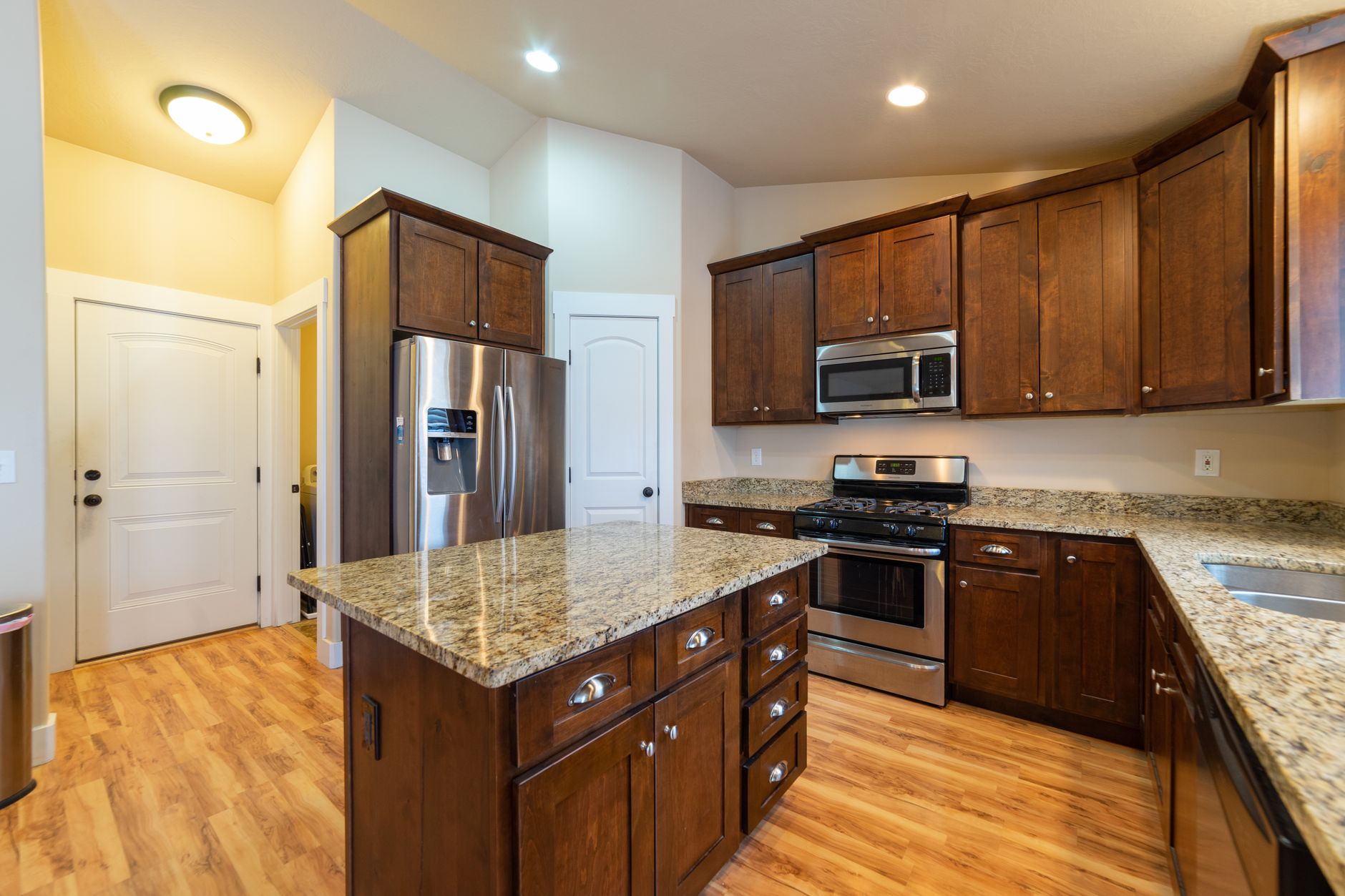
Matching Granite to Cabinets, Floors and Light in a Temecula Kitchen
2026-10-06
Most kitchen stone gets picked in about twenty minutes under warehouse lights, and then lives for twenty years in a room with a completely different light. In Temecula that difference is larger than people expect. The sun that crosses Riverside County in summer is strong and low in the afternoon, and a slab that looked quiet in the yard can look busy, warm or flat once it is set against cabinets and floors at home. Matching granite to a kitchen is mostly a question of undertone, light and scale, and each of those can be checked before anything is cut.
What is undertone, and why does it decide the match?
Every granite has a base color and an undertone sitting beneath it. A slab that reads as gray may lean blue, green, brown or pink, depending on the feldspar and mica in it. The undertone is the part that fights with, or agrees with, the cabinets and floor. A warm honey oak floor will pull the brown out of a gray granite and make it look muddy, while the same floor makes a gold and cream granite look settled. The quick test is to hold a white sheet of paper next to the slab. Against pure white, the undertone separates from the main color and becomes obvious.
Cabinets bring their own undertone, and so does the paint on the wall. Stucco exteriors in Temecula tend toward sand, tan and warm gray, and the interior colors often follow, which is why browns and golds in granite tend to look at home in this part of the Inland Empire. That is a tendency, not a rule. A white or pale gray kitchen can carry a darker stone with blue or black in it very well, and the result looks crisp rather than heavy.
How do cabinet and floor colors pair with granite?
The table below is a starting point that crews use when a homeowner arrives with a cabinet door and a floor sample and no firm idea. It is not a recipe, since the actual slab always has the last word, but it narrows a yard full of stone down to a handful worth walking up to.
Cabinet color Floor tone Granite leaning that usually works What to watch for White or cream Warm wood or tile Gold, brown and cream with moderate veining Very pale stone can look washed out beside bright white White or cream Gray tile or vinyl plank Gray with black flecks, or soft blue gray Cool stone beside a cool floor can feel cold Dark espresso Medium or dark wood Light gold, beige, or a stone with white veining Dark on dark hides the edge profile Medium oak or maple Tile in sand tones Brown with a touch of gold, green or burgundy Busy stone against busy grain looks crowded Painted gray or navy Light wood or pale tile White or pale gray with soft movement Strong black clusters can overpower the cabinets Painted sage or green Warm wood Cream, tan or stone with a hint of green Pink undertones clash with green paint A table like this works best when it is checked against the actual samples laid side by side. Phone photos shift color badly, so a door, a floor sample and a stone chip are better held in one hand under the window of the real room.
What does Temecula light do to a slab?
Sun entering a kitchen from the west can wash a polished slab with glare for an hour or more, and a kitchen with a big sliding door or a window over the sink will see it daily. Polished stone throws that light back and deepens every color in the slab, so a granite with strong mica sparkle will flash. A honed finish absorbs the same light and reads a shade softer. A leathered finish scatters it across a textured face. If the room faces west or has few windows, it helps to look at the slab twice, once in the open yard doorway and once under the yard roof, since the two views can differ a great deal.
North facing kitchens and rooms shaded by deep eaves or covered patios are the opposite case. They carry less light, so a very dark granite can turn nearly black in them, and the veining disappears. A medium tone with visible movement keeps some life in a darker room. Homes in the older neighborhoods along Murrieta Creek and in the hillside developments toward the Santa Rosa Plateau often have deep roof overhangs for the summer heat, and those kitchens tend to lean darker in feel than the builder's lighting suggests.
How much movement is too much?
Movement is the crew word for the flowing veins, bands and swirls through a slab. Quiet granite has small, even grains and reads almost like a speckled surface. Active granite has large ribbons, clusters or waves that travel across the full slab. Neither is better, but scale matters. A small galley kitchen with a lot of cabinets already in view usually looks calmer with quieter stone, while a large island kitchen can carry a bold slab as a centerpiece and often benefits from it.
Think about where the eye lands. An island or a peninsula with an overhang is the main show in most kitchens, and the busiest part of a slab can be positioned there on purpose. The perimeter runs along the walls can then take the quieter stretches of the same slab. When a slab is laid out on the template, the fabricator can shift the pieces around to place the strongest pattern where it will be seen, and the same slab can look quite different depending on that decision.
Do hardware, backsplash and appliances matter?
They do, because they sit right beside the stone. Stainless steel is cool and neutral, and it goes with nearly any granite. Black appliances disappear against dark stone and stand out against light. Brushed brass or bronze pulls and faucets pick up the gold flecks in a warm granite and can look deliberate, while chrome picks up the gray and silver. If a backsplash is going in, it should usually be quieter than the countertop. A strongly veined granite with a strongly patterned tile is a recipe for visual noise, whereas a plain subway tile or a simple stone strip lets the slab speak.
The sink matters too. An undermount sink leaves the edge of the cutout exposed, so the polished edge around it becomes part of the look, and a dark sink in a pale slab creates a strong line. A white or light sink in a similar tone blends into the stone and stays calm.
Which finish and edge profile suit the match?
Finish changes color perception. A polished finish deepens everything, a honed finish pulls colors toward gray and softens contrast, and a leathered finish adds a visible texture that reads as slightly darker. A slab that feels a bit too busy in polished form can feel tamer once honed. The edge profile has an effect as well. An eased edge is plain and makes the stone itself the subject, a bullnose is soft and traditional, and a beveled edge adds a thin line of light along the front. A profile with a lot of curves tends to suit a traditional kitchen and can look fussy next to flat modern cabinet doors.
What should be checked before the slab is tagged?
- Hold the cabinet door, floor sample and a paint chip next to the actual slab, not a photo.
- View the slab in daylight at the yard door and again under the roof.
- Look at the whole slab upright, then decide where the busiest part will sit.
- Check for fissures or pits, especially where a sink cutout is planned.
- Ask what finish the slab is available in, and look at a sample of it honed if the choice is open.
- Take a photo of the tagged slab on the rack so the right one is cut later.
Picking granite is easier when the room is treated as the judge instead of the yard. Bring the pieces of the kitchen to the stone, stand in the daylight, and let the slab that still looks right there be the one that gets tagged.